Elvira Palomino, CEO Trainsolutions
Introduction
As part of the relaunch of the commuter rail service between Lima and Chosica, the donation of rolling stock from the United States represents an important opportunity to improve urban mobility and promote more sustainable transport. However, this transfer also invites reflection on the challenges associated with using imported equipment that is more than three decades old, particularly from a health, environmental and contractual perspective. This article analyses the case in light of benchmark standards for the management of hazardous substances, taking the European REACH regulation (EC No 1907/2006) as an example. Drawing on this regulation, it identifies good practices that could inspire more preventive, transparent and responsible management in infrastructure projects that incorporate used or second-hand equipment. The aim is to contribute to strengthening international cooperation through frameworks that safeguard both public health and the technical integrity of projects.
In this context, it is also relevant to consider the commitments made by Peru in its process of rapprochement with the OECD, which recommends establishing effective chemical management systems and ensuring their practical application.
I. REACH: a benchmark European regulation
The REACH regulation (Registration, Evaluation, Authorisation and Restriction of Chemicals), in force in the European Union since 2007, is one of the strictest frameworks in the world for managing chemical substances. It is based on a key principle: no data, no market: if you cannot demonstrate that the substance is safe, you cannot place it on the market.
It is structured around:
- The obligation for manufacturers and importers to register, evaluate and declare the chemical substances they use or import with the European Chemicals Agency (ECHA);
- Restrictions or bans on hazardous substances (lead, asbestos, phthalates, etc.);
- Strict traceability throughout the supply chain;
- The preparation and availability of safety data sheets (SDS) for professional users.
- REACH applies to all sectors: rail, aeronautics, automotive, electronics and construction. It also imposes clear legal responsibility throughout the product life cycle.
Legislative Decree No. 1570 | RM No. 00214-2024-MINAM (24/07/2024) represents a significant step forward in modernising the regulatory framework for the integrated management of chemical substances. Its content is conceptually consistent with the principles of the REACH Regulation (EC No 1907/2006) and with the OECD recommendations, promoting a preventive approach based on traceability, risk assessment and shared responsibility among operators, regulatory authorities and users.
At this stage of implementation, and with a view to greater convergence with international standards, there are opportunities for improvement through the incorporation of complementary instruments, particularly relevant in contexts such as the import of used or donated industrial goods, which the regulation does not currently address specifically. These instruments include:
- The creation of a prior authorisation system for substances of very high concern (SVHC);
- The publication of official lists of restricted substances;
- The introduction of a mandatory prior technical survey for used or donated products;
- The development of active transparency mechanisms aimed at end users and consumers.
II. A concrete case: the Caltrain trains (Lima – Chosica) donated to Peru.
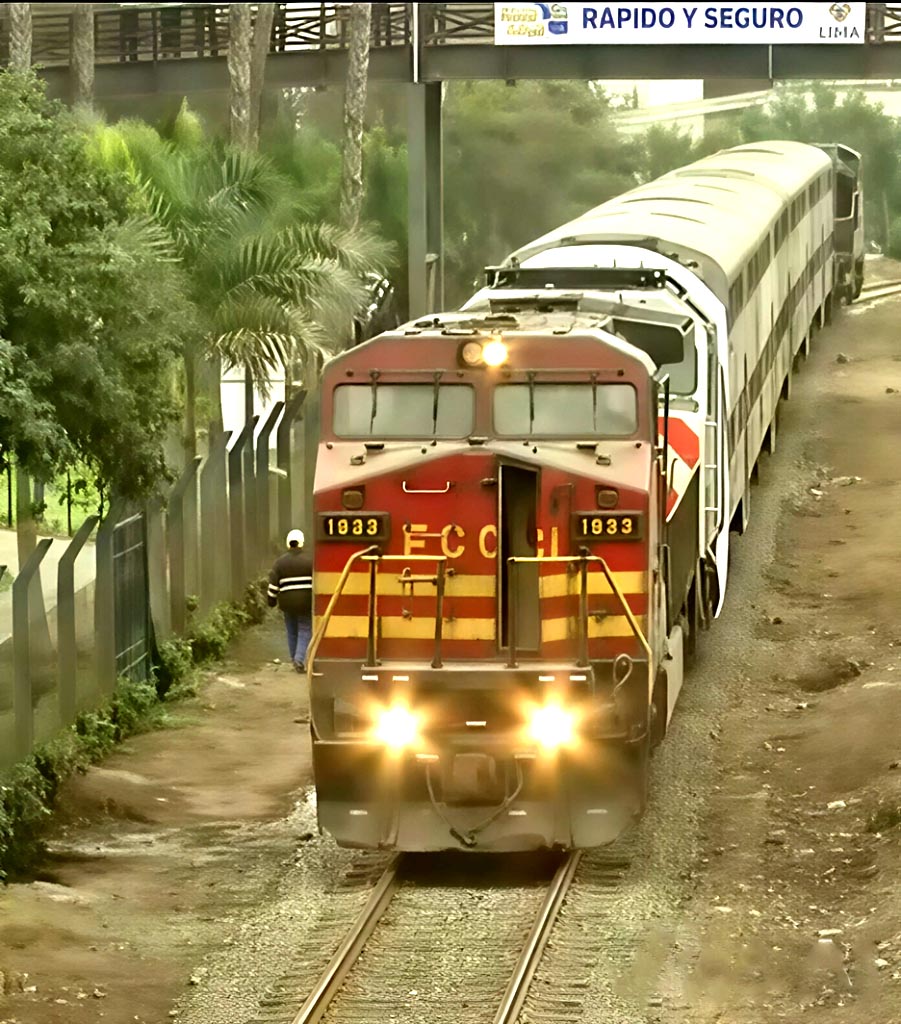
In 2024–2025, the state of California (state-owned company Caltrain) announced the donation of diesel trains built between 1985 and 1987 (EMD F40PH-2 locomotives and gallery-car passenger coaches) to the Municipality of Lima, to launch a suburban line between Lima and Chosica.
Although operational, these trains prompt reflection on significant regulatory and health risks.
a. Health and environmental risks: a high probability of asbestos.
Rolling stock from the 1980s often contains asbestos in brakes, thermal insulation,
interior linings and wiring. This substance is classified as a proven
carcinogen by the WHO.
Uncontrolled exposure (during maintenance, refurbishment or deterioration of
materials) can affect:
- Maintenance staff and passengers;
- The immediate surroundings (through the release of fibres);
- All operating staff.
According to the WHO, all types of asbestos are carcinogenic, but amphibole types are the most dangerous because of their persistence in the human body:
- Chrysotile can cause asbestosis, lung cancer and mesothelioma, although it is considered less aggressive.
- Amphiboles (such as crocidolite or amosite) are strongly associated with pleural mesothelioma, even at very low exposures.
b. Incompatibility with Peruvian legislation.
Peru has prohibited the import of products containing amphibole asbestos since
Law No. 29662 (2008) and its regulation D.S. No. 028-2014-SA.
This means that:
- The entry of these trains would be illegal without an express exemption from the Ministry of Health;
- The Municipality or the operator could face criminal liability in the event of an incident or a complaint.
Legislative Decree No. 1570 (28/05/2023) establishes measures for the integrated management of chemical substances, in line with OECD recommendations on environmental regulation. In the case of the Caltrain donation, the possible presence of asbestos — a substance recognised as hazardous — triggers specific obligations under this regulation. Article 6 requires the submission of a Safety Data Sheet (SDS) and hazard classification according to the Globally Harmonized System (GHS); Article 9 requires a health and environmental risk assessment; and Article 7 provides for mandatory registration in RENASQ. However, the Decree does not expressly require a prior technical survey of imported used products, which creates a practical gap: the entry of asbestos is prohibited, but no mandatory mechanism is established to detect it before it enters the country.
The health legislation takes precedence in controlling substances such as asbestos, but its effectiveness depends on the existence of prior technical procedures and active checkpoints, such as customs inspections or certifications required from the importer.
In practice, this means that potentially hazardous used goods can enter without a survey, unless an authority expressly requests one or the importer voluntarily provides it. This weakens the effective enforcement of the ban and shifts health and environmental responsibility to later stages of the product life cycle, when the risks may already have materialised.
Meeting these requirements not only complies with the current legal framework, but also helps align national management with the commitments made by Peru in its OECD accession process, strengthening institutional capacity to address chemical risks and promoting more coherent, preventive and transparent environmental governance.
c. No contractual guarantees = greater risk.
If the donation is not backed by a rigorous contract:
- All health and environmental responsibility is transferred to the Peruvian recipient;
- Considerable hidden costs arise (asbestos removal, waste disposal, replacement);
- Local authorities risk a reputational crisis.
III. Recommendations for railway projects in Peru using imported equipment
To ensure the safety, legality and sustainability of projects involving
imported equipment:
A. Regulatory proposals
- Amend Legislative Decree No. 1570 or its regulation to include a mandatory prior technical survey protocol for used or donated goods that may contain hazardous chemical substances.
- Integrate MINSA health checks into the import procedures for industrial goods, beyond consumer products, ensuring early intervention at the border where there is a risk to public health.
- Strengthen the role of SUNAT/Customs as the primary checkpoint through technical guides and health checklists, focusing on high-risk materials such as asbestos, PCBs and heavy metals.
B. Before accepting the equipment
- Require a formal declaration from the supplier or donor that no asbestos or other restricted substances are present.
- Request a specialised asbestos technical survey, in accordance with the NF F 01-020 standard applied in the rail sector.
- Apply the provisions of DL No. 1570, checking whether a Safety Data Sheet (SDS) must be submitted under the UN Globally Harmonized System (GHS) (Art. 6).
- Carry out or require a technical risk assessment, which could lead to an obligation to register in RENASQ (Arts. 7 and 9).
- If asbestos is detected, coordinate with MINSA or MINAM to determine whether a health authorisation or specific restrictions are required for its handling, refurbishment or final disposal.
C. In the donation or purchase contract
- Include a “zero asbestos” clause expressly prohibiting the delivery of equipment containing this mineral or other restricted hazardous substances.
- Establish the supplier’s liability in the event of non-compliance, including possible penalties, withdrawal or replacement of the equipment.
- Provide for a technical protocol for replacing or disposing of contaminated equipment, as well as the allocation of the associated costs.
D. During the operating phase
- Train local staff in managing the risks associated with hazardous materials, including safe maintenance, waste identification and incident response.
- Implement an environmental and health plan covering the handling, containment and regulated disposal of contaminated materials, in compliance with current environmental and occupational health regulations.
IV. Conclusion
The REACH regulation is not just a European standard: it is a model of technical, contractual and health governance that can and should inspire international projects, especially in contexts of regulatory asymmetry. In this sense, its preventive approach, based on the traceability of hazardous substances and supplier responsibility, offers useful benchmarks for cases such as the donation of the Caltrain trains. Adopting similar principles not only strengthens national chemical risk management, but also helps fulfil the commitments made in Peru’s OECD accession process, which promotes sound regulatory systems aligned with international good practice.
In the case of the Lima–Chosica train, the lack of prior analysis of the composition of the Caltrain equipment would expose Peru to legal, environmental and economic risks: the possible presence of asbestos, maintenance difficulties and persistent emissions.
Yes, the project’s objectives are commendable: easing congestion in Lima, linking Callao with Chosica and offering sustainable transport. But without clear compliance requirements, this donation could turn into a poisoned gift.
True progress lies not only in movement, but in the ability to foresee what is carried along with it.
Systematically including health and environmental compliance clauses in international contracts is no longer optional: it is a condition of credibility, sovereignty and public responsibility.